
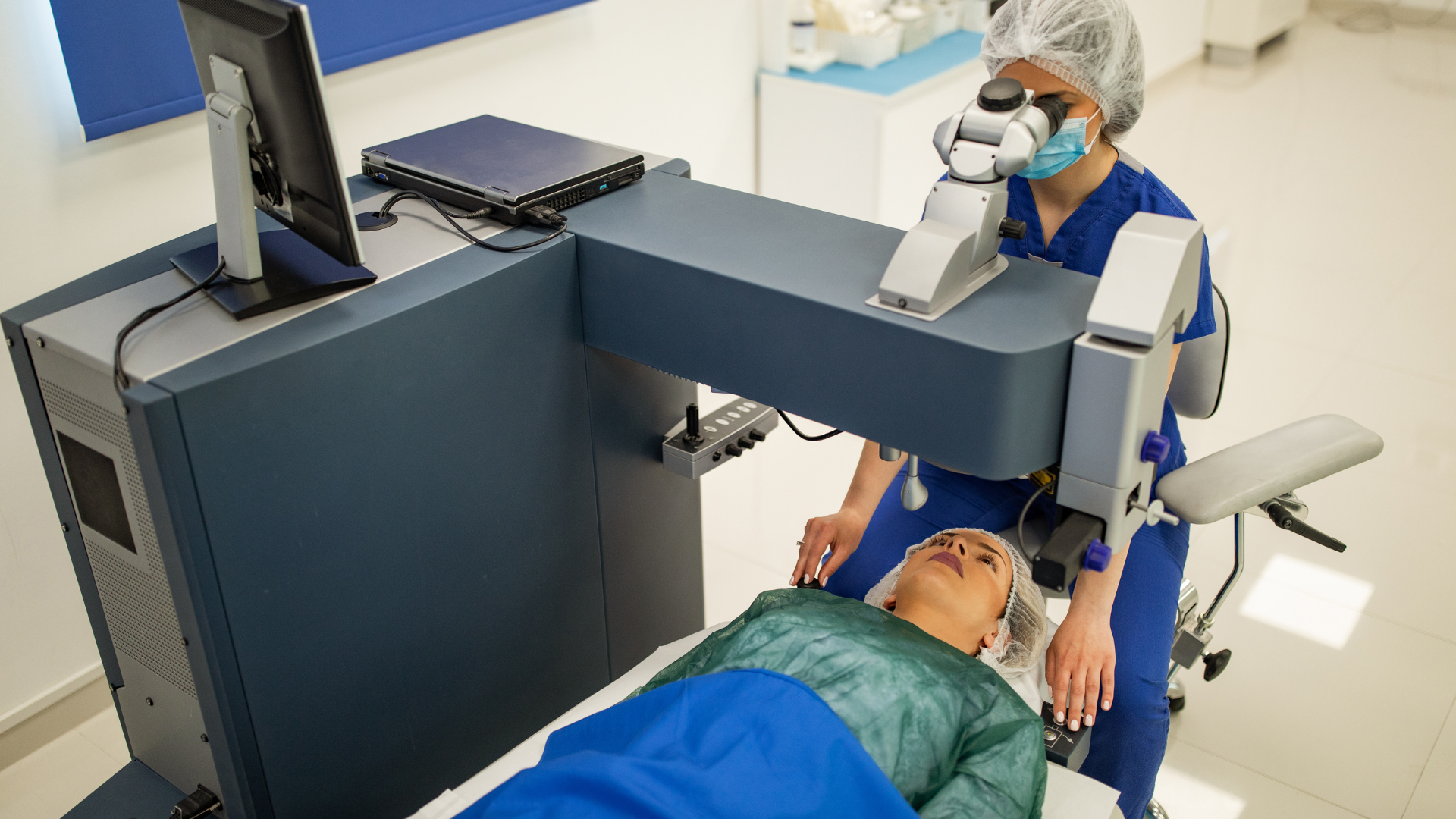
What is Laser Eye Surgery?
A Laser Eye Procedure is surgery to correct eyesight. Surgery can be performed on both eyes. A laser is used to remove the top layer of the cornea (the clear covering of the eye). The laser reshapes the cornea, restoring your eyesight. When compared with glasses or contact lenses, laser vision correction is a permanent, non-surgical procedure.
Laser Eye Surgery is becoming more and more common. Laser eye surgeons have developed advanced surgical techniques which have improved recovery time. The surgical procedures are less invasive, involve less risk of complications, and have a shorter recovery time.
Laser eye surgery, a revolutionary advancement in ophthalmic procedures, has transformed the way individuals correct vision issues. It’s important to consult a skilled eye surgeon melbourne (if that’s where you live) as they play a pivotal role in ensuring the success and safety of these surgeries. Whether you’re considering laser eye surgery or exploring other options, consulting with an experienced eye surgeon is paramount.
Are you tired of wearing glasses and contacts? Would you like to be able to enjoy your favorite outdoor activities without having to worry about wearing glasses or contacts? Laser eye surgery can help correct your vision so you can get clear, crisp vision so you can see clearly without glasses or contacts.
What Is the Cause – why do we need to undergo laser eye surgery?
Though millions of people around the world have undergone laser eye surgery, what exactly happens during this procedure? The cornea is the transparent dome shape in the front part of the eye, though it also has a thin layer of cells on the inside that help keep the eyes safe from infections. The cornea’s outermost layer (the epithelium) is covered in tiny hair-like connections called cilia, which act like the eye’s own natural scrubs. The cilia, which moves back and forth, sweep debris out of the eyes, keeping them clear.
Losing vision can be scary. It is hard enough to adjust to losing a sense, but it can be especially difficult to see life for what it truly is when you lose your eyesight. So, suppose you are one of the millions of people who have already undergone laser eye surgery and are still dealing with noticeable vision problems. In that case, you may be curious about the cause.
Choosing laser eye surgery can have a really positive effect on your life, increasing self-confidence and allowing you to participate in physical activity and sports once again. Laser eye surgery is one example of how minimally invasive surgical devices have changed modern medicine. By using precise lasers, ophthalmologists can correct vision problems with minimal discomfort and reduce recovery times.
However, it’s important to note that some individuals might have additional concerns related to their eye health. For instance, blepharoptosis (also known as low lying eyelids), a condition characterized by the drooping of the lower eyelid, can sometimes lead to vision problems like astigmatism or ametropia. Consult with an ophthalmologist or an eye surgeon to determine the most appropriate treatment for your specific case, be it using an eyedrop, taking an injection, or going for a surgery.
What Is Astigmatism
Astigmatism is a problem in one’s vision that occurs whenever the eye is shaped differently, causing the image to focus on “blurriness.” This problem can be easily corrected using eyeglasses or contact lenses, but some people never require the assistance of these corrective devices.
Astigmatism is a common vision problem that has an eye doctors’ name. Astigmatism is a vision condition that occurs when the cornea, the clear front part of the eye, is more like a football-shape than an apple. As a result, light entering the eye is focused unevenly, causing blurry vision. Eye doctors use glasses or contact lenses to correct the problem to reshape the cornea.
What Is Ametropia
Ametropia is a general term that is used to describe any refractive error of the eye, including myopia (near-sightedness), hyperopia (far-sightedness), astigmatism, and presbyopia. It is a common vision problem that occurs in about one percent of people. It is typically caused by an inadequate amount of clear, healthy, or “adult” eye tissue, although environmental factors and heredity may play a role thus, affecting both adults and children. Ametropia can be corrected with eyeglasses, contact lenses, or certain laser surgeries like SMILE, which can prove to be a quick and effective solution.
Choosing laser eye surgery can have a really positive effect on your life, increasing self-confidence and allowing you to participate in physical activity and sports once again.